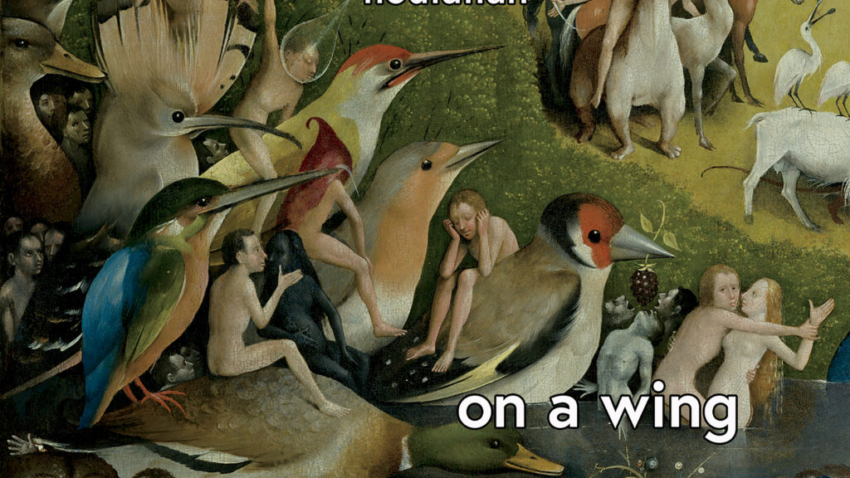
James Houlahan – On a Wing
James Houlahan’s On a Wing feels like a quiet act of defiance against chaos. Written and recorded in the aftermath of personal and environmental upheaval, the album doesn’t lean into despair—instead, it searches for something steadier. There’s a sense throughout that music isn’t just expression here, it’s survival. From the opening stretch, the record settles into a reflective but grounded tone. Songs like These Changes and Chariot Song carry a gentle forward motion, shaped by Houlahan’s songwriting rather than overproduction. His approach is direct, often circling around themes of acceptance, resilience, and the need to keep moving even when the world feels uncertain.

A lot of the album’s strength comes from the musicians surrounding him. The rhythm section of Danny Frankel and Greg Cohen gives the songs a natural, almost conversational flow. Their chemistry is subtle but essential—nothing feels forced, and the grooves sit comfortably beneath the storytelling. It allows the songs to breathe in a way that suits the album’s tone. There’s also a richness in the instrumentation that quietly expands the sound. John Kruth’s contributions bring in textures that feel organic and slightly unexpected, from the soft whistle tones to more unusual elements like the bulbul tarang. These touches don’t dominate, but they add colour, giving the album a wider emotional palette without distracting from its core. Tracks like That Bird and I and Carry On highlight the album’s central idea—that music itself has a role to play in getting through difficult moments. Houlahan doesn’t present this as a grand statement, but more as a personal understanding that gradually unfolds across the record.
The recurring imagery of birds and flight ties everything together. It never feels overused; instead, it works as a quiet thread of hope running beneath the surface. There’s a suggestion of movement, of lifting away from difficult ground without ignoring it completely. On a Wing doesn’t try to overwhelm or impress through scale. It’s steady, thoughtful, and rooted in lived experience. James Houlahan delivers a record that feels honest in its intent—less about escaping reality, and more about finding a way to keep going within it.








 English
Leave a Reply